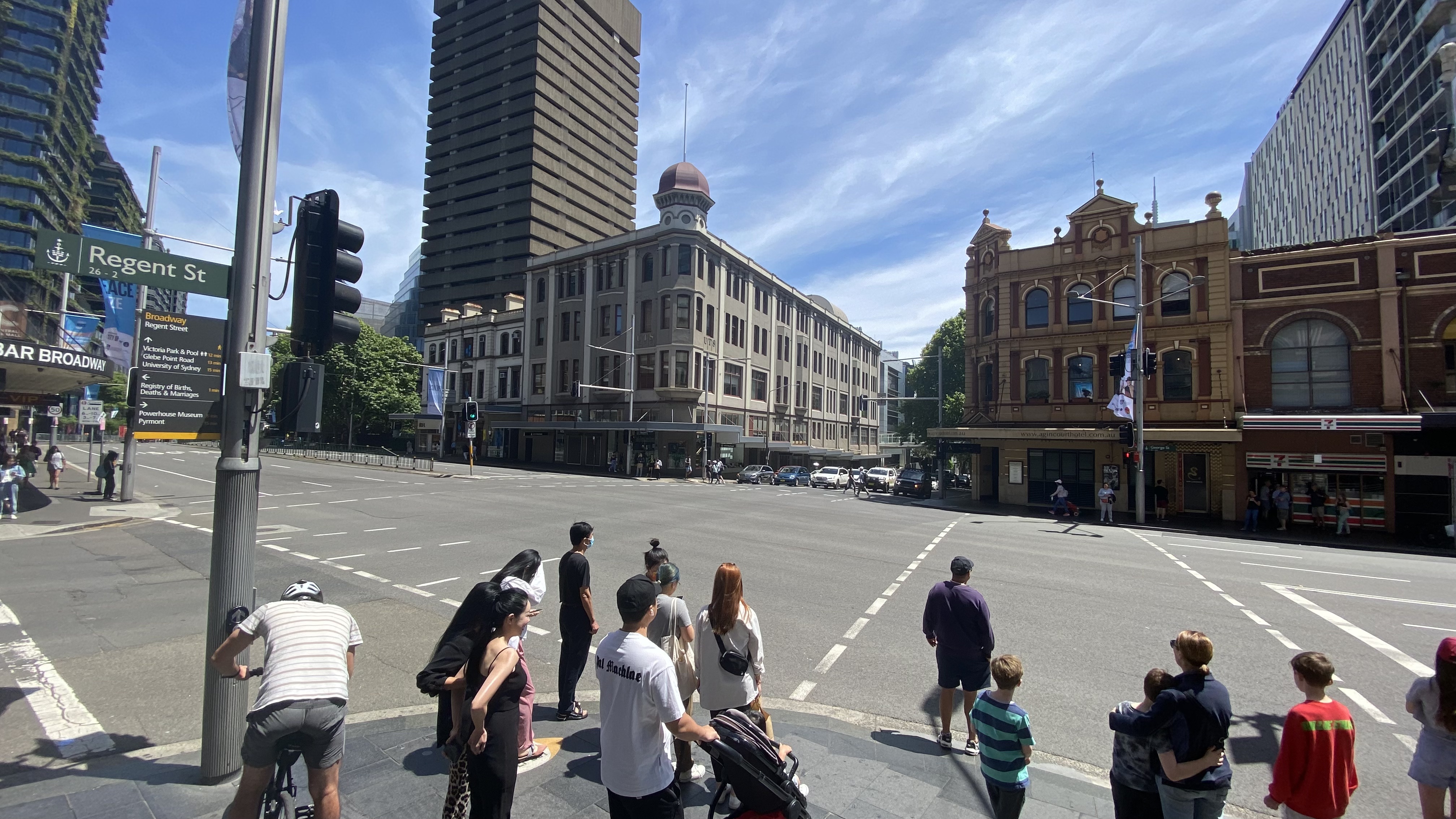
Broadway & Harris St
The aim of this group project was to find and analyse a dangerous intersection within Sydney, as well as to provide potential solutions that could make it safer. The particular intersection we investigated was the Broadway & Harris St intersection located right next to Central Station in the CBD.
It’s central location puts it in direct crosspath with many destinations, including 4 educational institutions, two shopping malls as well as many high-rise residential towers.
The intersection is also the meeting point for two major roads. Traveling West will connect you to Parramatta Rd and the inner West suburbs. To the North of the intersection, Harris St is connected to exits for the Harbour Bridge & Anzac Bridge – serving as a gateway to the Eastern suburbs.
This major research project gained a High-Distinction grade.
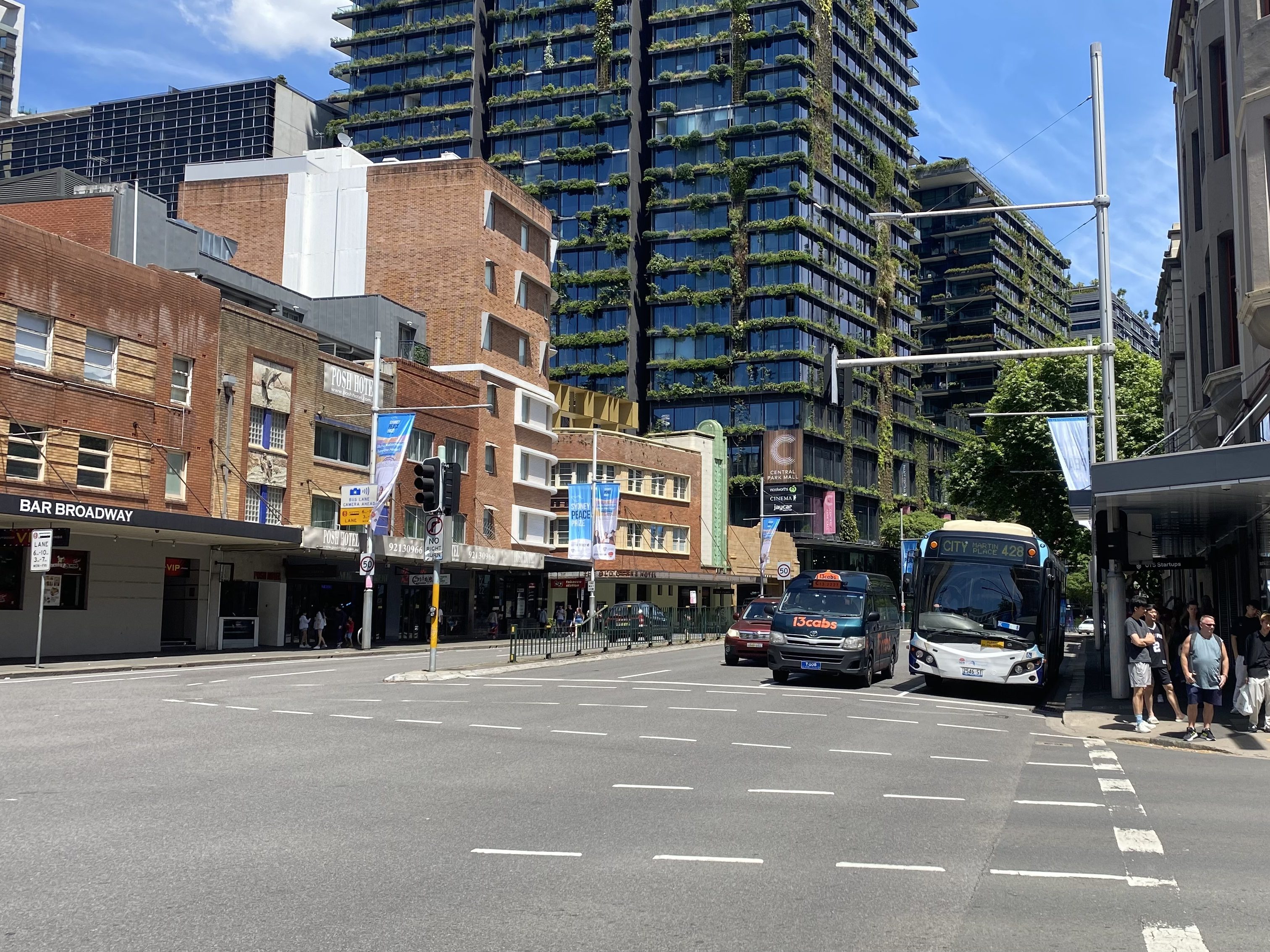
Crash Data Analysis
3 serious and 7 lesser injuries had been recorded at this intersection.
With 2 of the serious injuries involving pedestrians and making up 40% of the total injuries recorded, it was clear that the mixture of high pedestrian activity and high vehicular thoroughfare was the cause of danger.
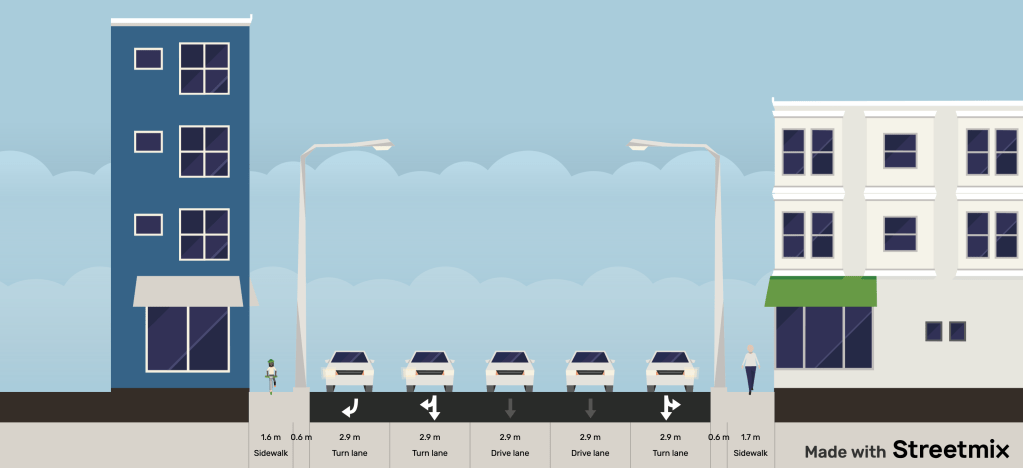
Site Observations
It was evident that vehicles were not following the 40km/h speed limit. We found that the design of the road was a contributing factor.
As Harris St was a multi-lane one-way, the driving experience can feel similar to a highway and encourage high speeds and aggressive driving behaviour (e.g. jockeying). The massive width of Broadway also has a similar effect.
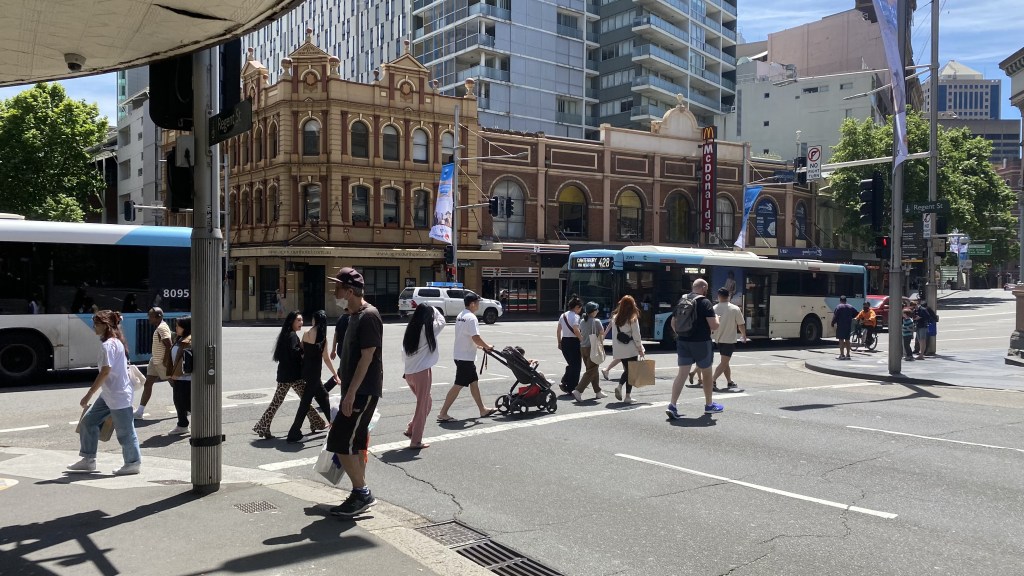
Traffic Analysis
On-site investigations found that pedestrians outnumber vehicles on a typical day.
In an hour, the estimated pedestrian count through the intersection was 4200, compared to only 3800 private vehicle passengers.
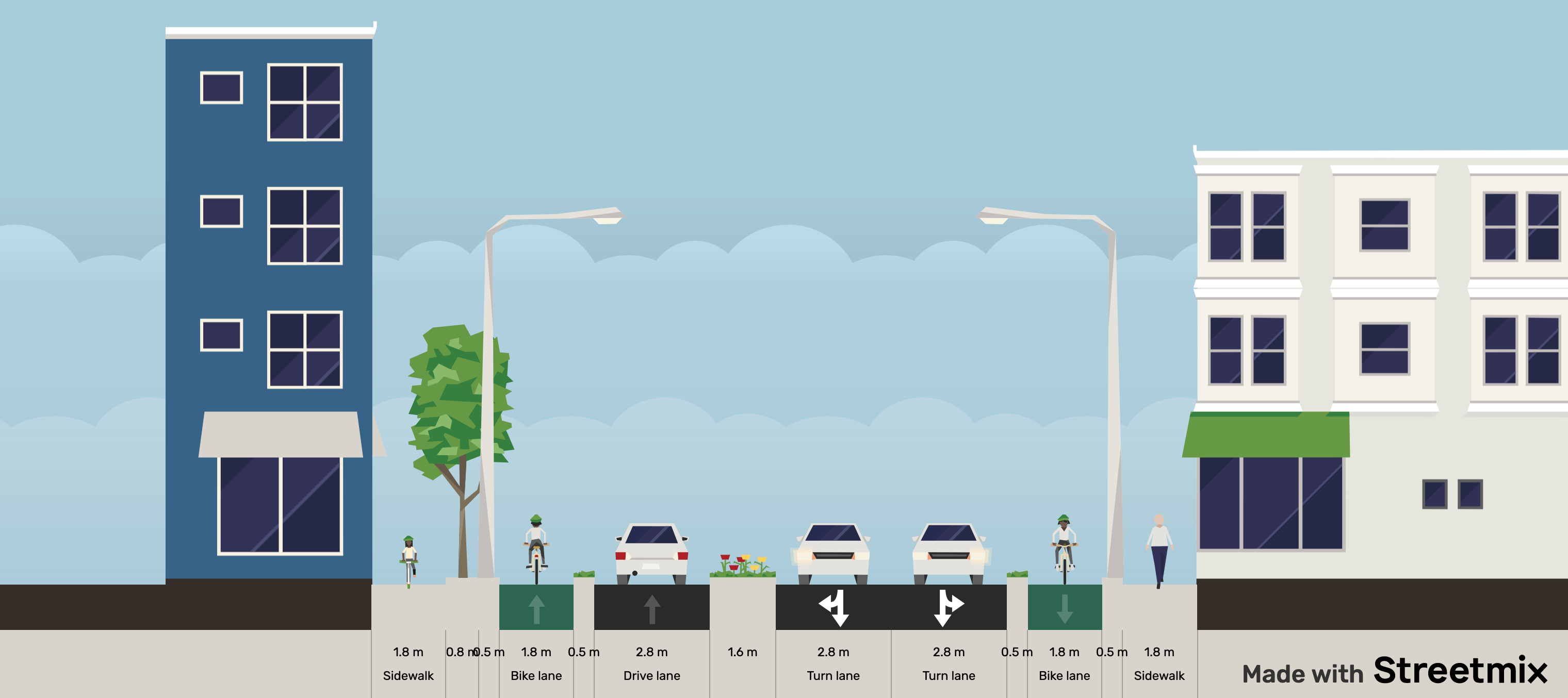
From the investigation, it was made abundantly clear that there was a fundamental flaw in the design of the intersection. Our proposals centred around the need for streets to reflect it’s actual use.
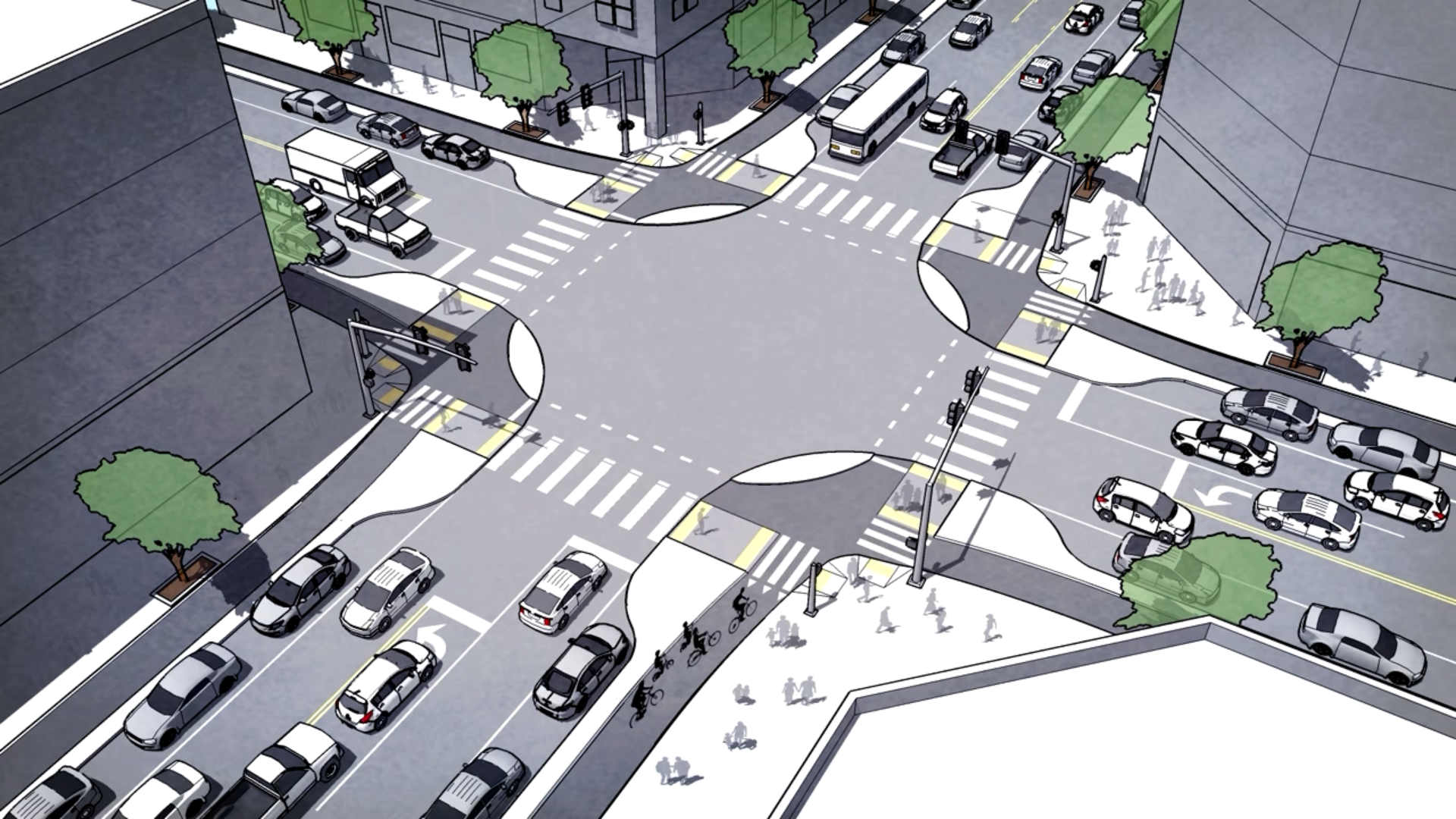
Thus, our designs incorporated techniques that focused on traffic calming measures. Things like protected intersections, narrower lane widths and reverting Harris St into a two-way street.
These measures help to improve the experience for pedestrians – the main users of this intersection. The proposed changes would also go to boosting the local economy, as it would help facilitate even higher numbers of pedestrians to travel through – and stop by businesses established along this corridor.
People-Oriented Engineering
 Reina Miura